Alex

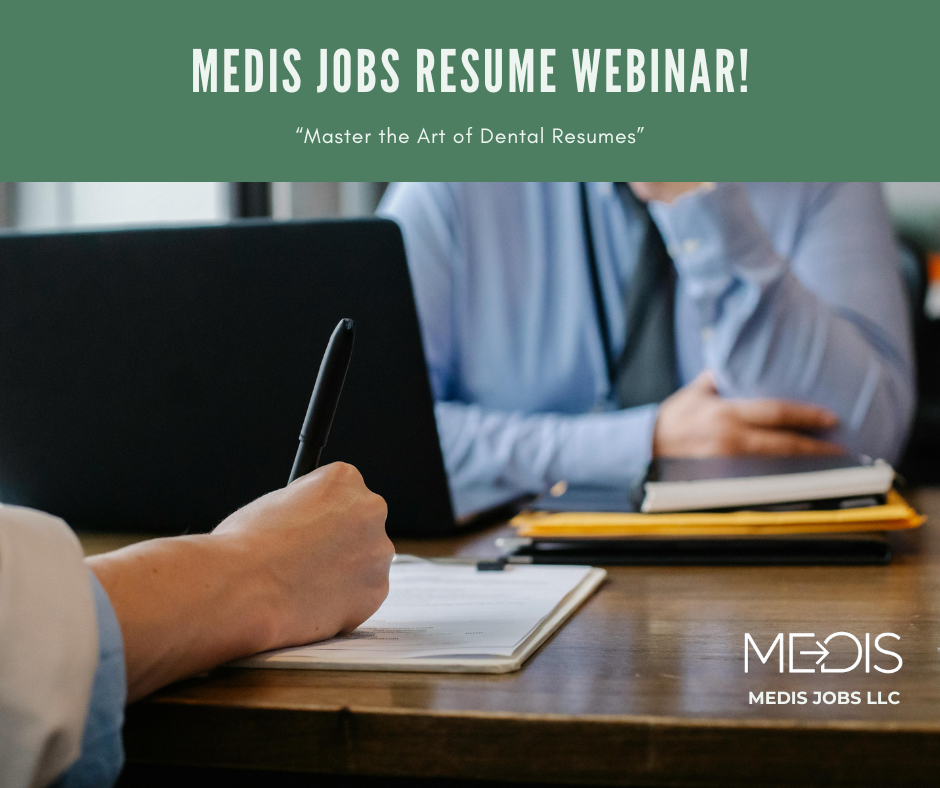
Medis Jobs Resume Webinar

Your resume is your first impression – and in the dental world, it needs to stand out. Join Medis Jobs LLC to craft a strong, professional resume that highlights your skills, experience, and career goals. Whether you’re a dental student, new graduate, or seasoned professional, we cover the essentials that make employers take notice. Set yourself apart and take the next step in your career.

Medis Jobs Resume Webinar Read More »

The Future of Medis Jobs LLC – Building Tomorrow’s Dental Career Hub

The dental profession is constantly evolving, and so are the ways that professionals connect with new opportunities. At Medis Jobs LLC, we see the future as an opportunity not just to list jobs, but to create a truly comprehensive career hub, one that supports dental professionals throughout every stage of their journey. Our mission has always been to connect talented professionals with practices that value their skills, but we’re expanding that vision to include a wider range of opportunities across the country. Whether you’re looking for work in a small-town clinic or a multi-location group, our growing network will ensure that high-quality positions are always within reach. Technology plays a key role in this growth. We’re preparing to launch intelligent job matching that considers more than just your resume. By factoring in your career goals, preferred schedule, and workplace culture preferences, we aim to help you find positions where you can thrive, not just work. But the future of Medis Jobs LLC isn’t only about finding your next position, it’s about helping you build a career. That’s why we’re expanding our educational resources to include contract negotiation guidance, resume workshops, interview coaching, and other opportunities. We’re also building a professional community where dental workers can share advice, mentorship, and encouragement, creating a network that supports both career advancement and professional satisfaction. As the dental industry faces staffing challenges and increasing patient demands, Medis Jobs LLC is committed to being more than a job board. We’re here to be your partner in career growth, your advocate in negotiations, and your resource for every step forward. The future is bright for dental professionals, and we’re proud to help light the way. Medis Tip: Career growth isn’t just about your next job, it’s about the network you build along the way. Stay connected with peers, mentors, and industry groups to keep doors open for future opportunities.

The Future of Medis Jobs LLC – Building Tomorrow’s Dental Career Hub Read More »

W-2 vs. 1099 in Dentistry: What’s the Difference?

One of the most important decisions you’ll face when starting a new dental position is whether you’ll be classified as a W-2 employee or a 1099 independent contractor. This distinction isn’t just about how you’re paid: it affects your taxes, your benefits, and even your long-term financial stability. As a W-2 employee, you’re considered part of the practice’s staff. The practice takes care of withholding income taxes, Social Security, and Medicare, and you often gain access to benefits such as health insurance, malpractice coverage, continuing education allowances, and retirement plans. This setup offers stability and protections, though it often comes with less flexibility in setting your schedule or negotiating income beyond the agreed-upon structure. On the other hand, working as a 1099 independent contractor means you are self-employed in the eyes of the IRS. You are responsible for paying your own taxes in full, including both the employer and employee portions of payroll taxes. While this requires careful financial planning, it also comes with more independence. Contractors often enjoy greater flexibility in their schedules, higher daily rates or production percentages, and the ability to deduct business expenses like travel, scrubs, or continuing education. The trade-off is that you won’t receive benefits from the practice and have less job security than a traditional employee. Which arrangement is better depends on your career goals. If stability and benefits are most important to you, W-2 employment is often the safer route. If independence and flexibility appeal to you, and you’re comfortable managing the added tax responsibilities: a 1099 role might be a better fit. Medis Tip: Don’t just compare the paycheck. A 1099 position may look higher-paying on paper, but once you account for taxes and missing benefits, the W-2 role may provide more long-term value.

W-2 vs. 1099 in Dentistry: What’s the Difference? Read More »

Non-Compete vs. Non-Solicitation Clauses in Dental Contracts

Restrictive covenants are one of the most significant, and often confusing, parts of a dental employment contract. These provisions are designed to protect the practice, but they can shape where and how you’re able to work once you move on. Two of the most common are non-compete clauses and non-solicitation clauses, and though they’re sometimes grouped together, they serve very different purposes. A non-compete clause restricts where you can work after leaving a practice. It usually sets a geographic radius: say, ten miles from the office, and a length of time, often one or two years. Within those limits, you cannot practice dentistry, whether as an associate, owner, or partner. For dentists who want to stay in the same city or community, these restrictions can have serious career implications. A non-solicitation clause, by contrast, restricts who you can contact. It doesn’t prevent you from practicing dentistry, but it stops you from recruiting patients, staff, or referral sources from your former employer. You can’t call up patients you used to treat and invite them to your new office, nor can you encourage hygienists or assistants to join you. Patients may still choose to follow you, but the key is that you cannot be the one initiating or influencing that move. Both clauses can significantly limit your professional options. Together, they can make it difficult to transition smoothly into a new practice nearby. That’s why it’s essential to understand the scope of each one before signing. Pay close attention to how the restrictions are defined, how long they last, and whether they apply to multiple office locations or just the one you worked in. Medis Tip: Restrictive covenants are negotiable. Don’t be afraid to push for a smaller radius, a shorter timeframe, or clearer language about what exactly is restricted.

Non-Compete vs. Non-Solicitation Clauses in Dental Contracts Read More »

What Is a Zipper Clause in a Dental Contract?

When you’re reviewing a dental employment contract, you may come across a legal term that sounds unusual: the zipper clause. While it may not stand out at first glance, it can have a major impact on how your contract is interpreted and enforced. A zipper clause, also called a merger or integration clause, means that the written contract represents the entire agreement between you and your employer. In other words, if something isn’t explicitly included in the contract, it doesn’t exist in the eyes of the law. For dentists, this can be especially important. Perhaps your employer mentioned in conversation that you’d receive a continuing education stipend, or promised flexibility in scheduling. If those promises aren’t spelled out in writing, the zipper clause allows the employer to disregard them. This clause matters because so much of dental employment involves negotiating details around pay structures, hours, and benefits. You may agree on a percentage of production, or specific days off, but if it doesn’t appear in the final draft of your contract, a zipper clause could erase your ability to enforce it. The best way to protect yourself is to be thorough during the review process. Make sure every important promise, even if it seems obvious, is written into the contract. If you’re unsure whether something should be included, ask. And if you see a zipper clause, take it as a reminder that nothing outside the four corners of the agreement will count later. Medis Tip: In dentistry, handshake deals won’t hold up against a zipper clause. If you expect it, get it in writing.

What Is a Zipper Clause in a Dental Contract? Read More »

Ergonomics in Dentistry – Saving Your Career by Saving Your Body

Dentistry demands precision, but it also demands physical endurance. Hours spent bent over patients, holding instruments in tight grips, and maintaining awkward positions take a serious toll on the body. For many professionals, pain in the neck, shoulders, back, and wrists becomes an unwelcome part of daily life. Left unchecked, these strains can evolve into chronic issues that shorten careers. Yet ergonomic health is often overlooked until it becomes a problem. Small habits like leaning forward too often, using loupes at the wrong angle, or gripping instruments too tightly: might not feel serious in the moment, but over years of practice they accumulate into real damage. Protecting your physical health starts with awareness and intentional adjustment. Simple changes can make a lasting difference. Conscious posture correction and the use of ergonomic chairs reduce spinal strain. Investing in properly fitted loupes and adjusting lighting creates a setup that supports rather than undermines your body. Even brief pauses during the day to stretch or shift position help counteract hours of static posture. Reaching for instruments that are strategically placed instead of twisting or straining saves unnecessary effort. When these adjustments are put into practice consistently, they don’t just ease discomfort, they preserve mobility and energy, allowing dental professionals to perform at their best for years to come. Making ergonomics a priority is more than self-care; it’s career care. A dentist who can practice free from chronic pain is more focused, more effective, and more capable of sustaining a long, fulfilling professional life. Medis Jobs Tip: As you explore career opportunities, pay attention to the work environment itself. Practices that invest in modern operatories, ergonomic equipment, and wellness initiatives demonstrate they value the health of their team. Through Medis Jobs’ detailed employer profiles, you can quickly identify workplaces that put provider well-being at the forefront.

Ergonomics in Dentistry – Saving Your Career by Saving Your Body Read More »

The Role of Emotional Intelligence in Dentistry: A Game-Changer for Career Growth

Dentistry is often thought of as a field built entirely on science, precision, and technical skill. While those elements are absolutely critical, they are only part of the equation. The professionals who truly thrive in dentistry usually have something extra: emotional intelligence. Emotional intelligence, or EQ, is the ability to understand and manage your own emotions while also recognizing and responding to the emotions of others. In a dental office, this shows up in countless ways. A dentist with strong EQ can calm a nervous patient in the chair, collaborate smoothly with staff during a hectic day, and navigate difficult conversations about treatment plans with both empathy and clarity. High EQ makes patients feel heard and cared for, which directly translates into higher satisfaction, stronger trust, and long-term retention. The benefits don’t stop with patient care. Emotional intelligence also fosters harmony in the workplace. Dental practices can be high-pressure environments, and professionals who can defuse tension, keep communication constructive, and handle challenges with resilience create a much healthier environment for their teams. In leadership roles, whether managing staff or running an entire practice, EQ becomes an even greater asset. Inspiring confidence, motivating employees, and guiding a team through the inevitable ups and downs of the profession all hinge on the ability to lead with empathy and emotional awareness. What’s most encouraging is that EQ is not fixed. Just like clinical techniques, it can be learned and developed. Simple practices such as active listening, reflecting before reacting, and seeking honest feedback are small steps that build significant emotional skill over time. Ultimately, technical expertise may get you hired, but emotional intelligence often determines how far you will go in your career. Patients rarely remember the details of a flawless filling, but they always remember how you made them feel in the chair. Medis Jobs Tip: When preparing a resume or going into an interview, don’t just highlight what you do—explain how you do it. Sharing examples of how you eased a patient’s fears or guided your team through a stressful day shows employers that you bring more than skill; you bring the emotional intelligence that makes practices thrive.

The Role of Emotional Intelligence in Dentistry: A Game-Changer for Career Growth Read More »

Making the Most of Mentorship in Dentistry

Mentorship can be a powerful tool for personal and professional development, particularly early in a dental career. Whether you’re a recent graduate or transitioning into a new role, connecting with experienced professionals provides guidance, support, and insight that textbooks alone cannot offer. The most valuable mentor relationships begin with intention. Seek mentors who not only have clinical expertise, but who also model the kind of leadership, communication, and work-life balance you aspire to develop. Once you identify a potential mentor: whether through your practice, dental school, or professional networks-reach out with a clear and respectful message. Express your admiration for their work and your interest in learning from their experience. Most seasoned professionals are open to mentoring if approached thoughtfully. As the relationship develops, set goals. Define what you hope to learn and how often you’d like to meet or communicate. Mentorship can include everything from reviewing treatment plans to navigating workplace dynamics to preparing for ownership opportunities. It’s also important to be an active participant. Bring questions, follow through on advice, and express appreciation for their time and support. Medis Tip: When using Medis Jobs, look for practices that list mentorship, growth opportunities, or team development in their job descriptions. These are strong indicators of a workplace that invests in its people.

Making the Most of Mentorship in Dentistry Read More »

How to Prepare for the First 90 Days in a New Dental Role

Starting a new job in a dental practice brings excitement and pressure. The first 90 days are critical to setting the tone for your long-term success. With the right mindset and preparation, you can make a lasting impression on your colleagues, patients, and leadership team. Begin by learning the systems, workflows, and team structure of your new workplace. Ask questions early and often, and be open to learning from dental assistants, hygienists, and administrative staff. Respect for each role builds trust and facilitates smoother collaboration. Punctuality, preparedness, and professional communication are especially important during the early weeks. Small actions: arriving early, dressing appropriately, and actively participating in team huddles-signal that you take the opportunity seriously. Developing strong relationships with colleagues should also be a priority. Take time to understand the culture of the office. Observe how team members interact, how feedback is delivered, and how conflict is resolved. This cultural awareness will help you integrate more effectively. Finally, ask for feedback. Whether through informal check-ins or scheduled reviews, seeking input on your performance shows humility and a commitment to growth. Medis Tip: Before starting your role, review the original job posting on Medis Jobs and compare it to your upcoming responsibilities. This can help you align expectations and prepare for early success.

How to Prepare for the First 90 Days in a New Dental Role Read More »

What To Do After a Job Rejection – Turning “No” Into Your Next Opportunity

Receiving a job rejection can feel discouraging, especially after investing time and energy into the interview process. However, how you respond in the days that follow can define your professional trajectory. First and foremost, avoid taking rejection personally. A “no” often reflects timing, internal priorities, or other factors beyond your control. It does not mean you’re unqualified or unworthy of the role. One of the most proactive steps you can take is to reach out to the hiring manager or interviewer to request feedback. Keep your message professional and concise.  A simple note such as, “Thank you again for the opportunity to interview. While I’m disappointed to not be moving forward, I would greatly value any feedback you’re willing to share,” demonstrates maturity, humility, and a desire to grow. It’s important to emphasize that this type of outreach is not unprofessional-on the contrary, it can leave a positive impression. Some employers may not be able to provide specific feedback due to policy, but many will appreciate your initiative.  In the meantime, take a moment to reflect. Review what went well in the process and where you might improve. Update your resume, strengthen your interview skills, and consider broadening your job search criteria. A rejection does not mark the end of your journey-it can be the catalyst for professional improvement and, ultimately, the right opportunity. Medis Jobs Tip: Use your Medis Jobs profile to keep track of interview experiences and feedback. Our platform allows you to organize your job search activity so you can grow from each step and refine your applications over time.

What To Do After a Job Rejection – Turning “No” Into Your Next Opportunity Read More »

Scroll to Top